
Public safety work comes with unique pressures that can impact mental and physical health. grows through routines, practical tools, and supportive connections. Explore strategies and resources designed to help you stay well, both on and off the job.
Daily Routines and Habits
Creating structure where you can will make a meaningful difference in how you feel and function.
- Stability: Predictable routines offer a sense of control in unpredictable work.
- Stress reduction: Knowing what to expect frees up mental energy for critical decisions.
- Resilience: Small, consistent habits support recovery and readiness, allowing you to keep going.
Small, repeatable actions build a foundation for wellbeing and performance. Treat these new habits like a muscle that you build through repetition and regular use. Over time, these habits become protective factors that help you manage uncertainty and stay ready for what’s ahead.
Quality sleep, balanced nutrition, and regular physical activity are cornerstones of resilience and readiness. often face irregular shifts, high-stress situations, and physically demanding work, making self-care essential.
- Sleep: Aim for six to nine hours of quality rest if possible. Use blackout curtains, maintain a consistent pre-bedtime routine, and take short naps to manage fatigue. Good sleep supports alertness, focus, and . To learn more, download the Sleep 101 Toolkit and explore tips for improving your sleep.
- Nutrition: Balanced nutrition fuels sustained energy, focus, and mood stability. Plan ahead for long shifts with nutrient-rich meals and hydration strategies that keep you going throughout the day. Visit the Canadian Food Guide for more information.
- Movement: Regular physical activity improves endurance, cardiovascular health, and stress tolerance and may help you to manage your mood. Even short bouts of movement can boost energy and promote better sleep.
Substance use is different for everyone and can be viewed on a spectrum with varying stages of benefits and harms. To cope with stress and trauma, some individuals may turn to alcohol or drugs as a way to cope, unwind, or temporarily disconnect. While these reactions are understandable, over time unhealthy substance use can increase stress over time, disrupt sleep, impact mood, and make recovery more difficult.
Establishing consistent routines, strong connections, and using practical tools can help reduce reliance on substances during challenging periods.
Mindfulness and Stress Reduction

Stress is a common part of public safety work. How we respond to this stress and how long you feel this stress can have a major impact on wellbeing and performance.
Each person may respond differently to the same stress, and it is important to remember what may seem like a small stress to one person may be experienced as very stressful by another person. Understanding your stress levels can help you build resilience over time.
Performance depends on how much stress you’re carrying. Not enough and you disengage; too much and you burn out. This curve shows where the balance sits.
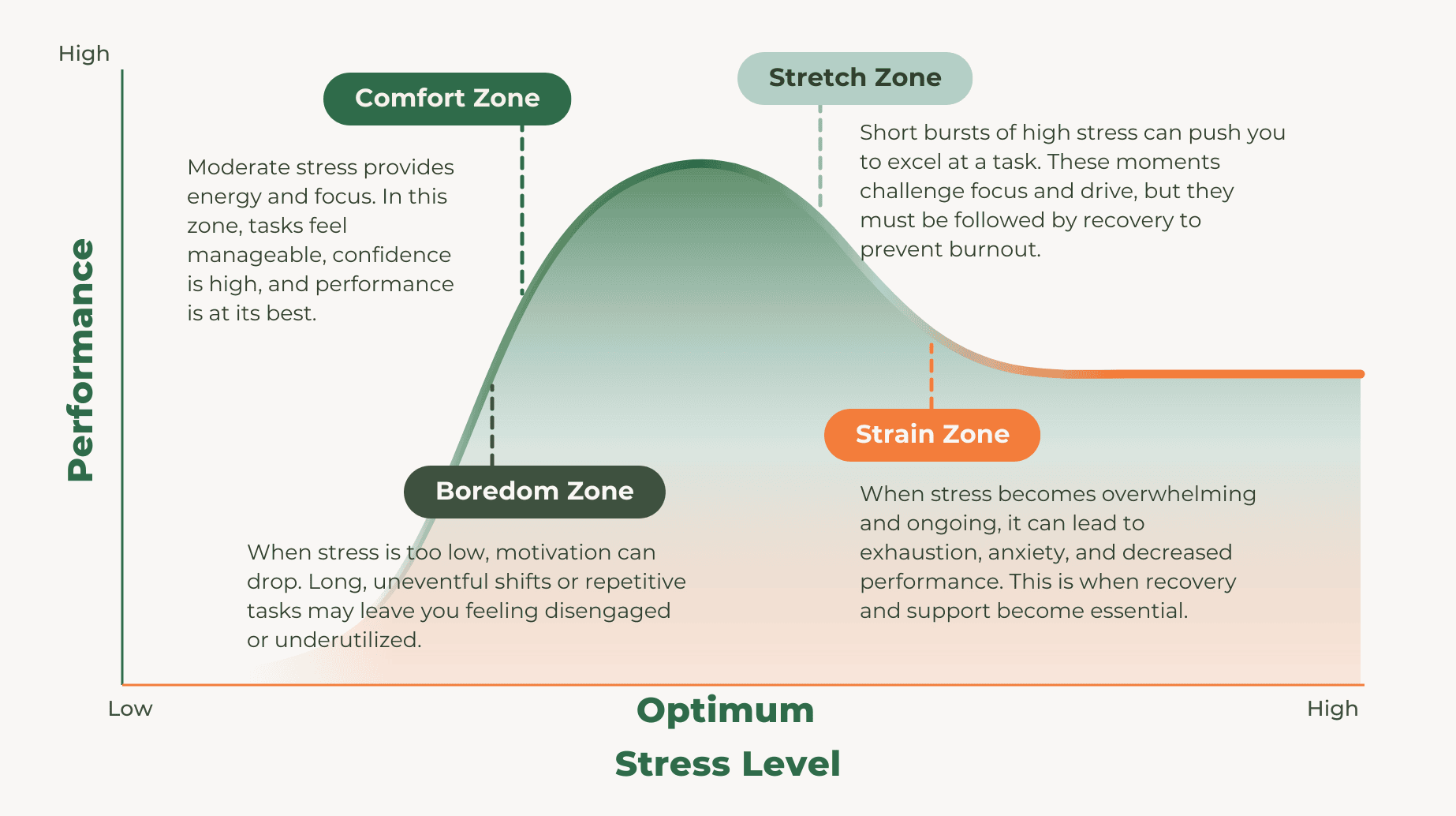
- Boredom Zone: When stress is too low, motivation can drop. Long, uneventful shifts or repetitive tasks may leave you feeling disengaged or underutilized.
- Comfort Zone: Moderate stress provides energy and focus. In this zone, tasks feel manageable, confidence is high, and performance is at its best.
- Stretch Zone: Short bursts of high stress can push you to excel at a task. These moments challenge focus and drive, but they must be followed by recovery to prevent burnout.
- Strain Zone: When stress becomes overwhelming and ongoing, it can lead to exhaustion, anxiety, and decreased performance. This is when recovery and support become essential.
Maintaining a healthy balance as best you can between the comfort and stretch zones helps support long-term mental wellness and readiness.
Mindfulness techniques, like deep breathing, body scan, and guided meditation, can help you regulate stress and stay present under pressure. Even 10 to 12 minutes a few times a week can make a difference.
These practices can:
- Improve your ability to notice, identify, and manage your emotions during times of stress
- Support focus and adaptability
- Enhance decision-making in high-stress situations
Healthy regulation isn’t about shutting emotions off. It’s about tuning in. Notice what you’re feeling, what it might be telling you, and choose how to respond in a way that supports your wellbeing. Remember, building a new muscle takes time. Celebrate small victories and continue to build your muscle through practice and repetition.
Resilience isn’t just personal toughness. It’s a skill that grows through routines, relationships, and access to supportive resources. Developing small, consistent habits like checking in with a peer daily or planning a recovery activity after work can be effective strategies for strengthening resilience. Practical tools, consistent habits, and strong networks strengthen resilience over time, reducing the long-term impact of occupational stress.

Peer Support
Public safety work comes with challenges only those in this field truly understand. offers a space to share experiences with someone who understands your job.
A best practice for peer support programs is to be and confidential. These programs prioritize safety, respect, and cultural relevance. Conversations remain private and support is designed to reduce and build trust.
What is Peer Support?
- Informal or structured: Peer support can range from casual check-ins with a coworker who understands your role, to formal programs with trained peer supporters, or even mobile platforms that offer guidance and connection on demand.
- Proactive or reactive: You can access Peer support before stress becomes overwhelming, or reach out in response to a specific challenge, whether it’s a difficult event at work or personal struggles at home.
How Can it Help?
- Offers relatable guidance and support.
- Encourages early intervention before stress escalates.
- Strengthens resilience, psychological health, and wellbeing.
Reducing Mental Health Stigma
Mental health challenges are common, but stigma can make them feel isolating. Fear of judgement or being seen as weak, or deemed unfit for the job can prevent people from reaching out for help.
Think about a time when you needed mental health support and didn’t reach out. What stopped you? Remember, it is necessary to put on your own oxygen mask before we can help others. Seeking support doesn’t mean letting others down. Instead, it means helping yourself so that you can help others. Remember, we all deserve support.
What Happens When Stigma Is Reduced
- Conversations about mental health are normalized and seeking support feels accepted and understood.
- Challenges are recognized and addressed early, preventing escalation and reducing impact.
- Workplaces foster trust, empathy, and mutual support, enabling teams to prioritize wellbeing and care for one another.