
This guide is part of a broader Anti-Stigma Strategy to promote positive mental health and reduce work-related mental health injuries. It brings together practical tools, resources, and recommended practices to help public safety organizations (PSO) build a sustainable psychological health and safety (PHS) program.
The guide is informed by evidence-based practices, the CSA Z1003 Standard for Psychological Health and Safety in the Workplace, Ontario’s legislative context, and is grounded in a approach, valuing both Western and Indigenous ways of knowing.
For additional support in using this guide, PSOs are encouraged to engage with a PSHSA Health, Safety and Wellbeing Consultant.
Addressing Stigma and Mental Health in Public Safety
Potential Outcomes
By implementing the practices outlined in this guide, public safety organizations can help reduce mental health and create a more supportive workplace culture, potentially leading to the following benefits:
Reduce
- Workplace injuries and healthcare spending
- Stigma and discrimination in the workplace
- Harassment, bullying, and workplace violence
- Absenteeism and presenteeism
Improve
- Productivity, recruitment, and retention
- Organizational culture and job satisfaction
Guide Objectives
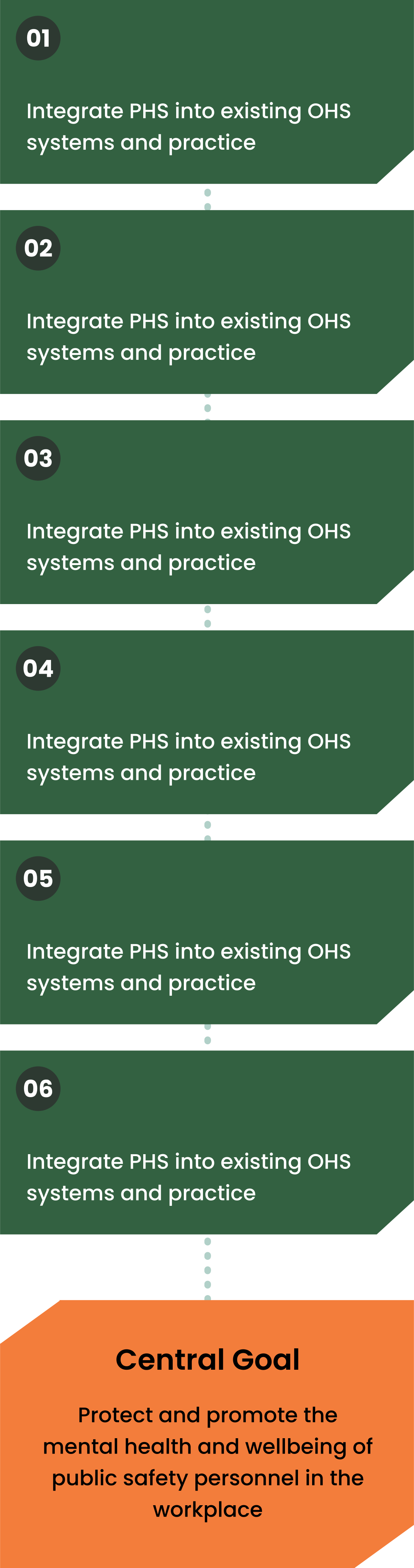
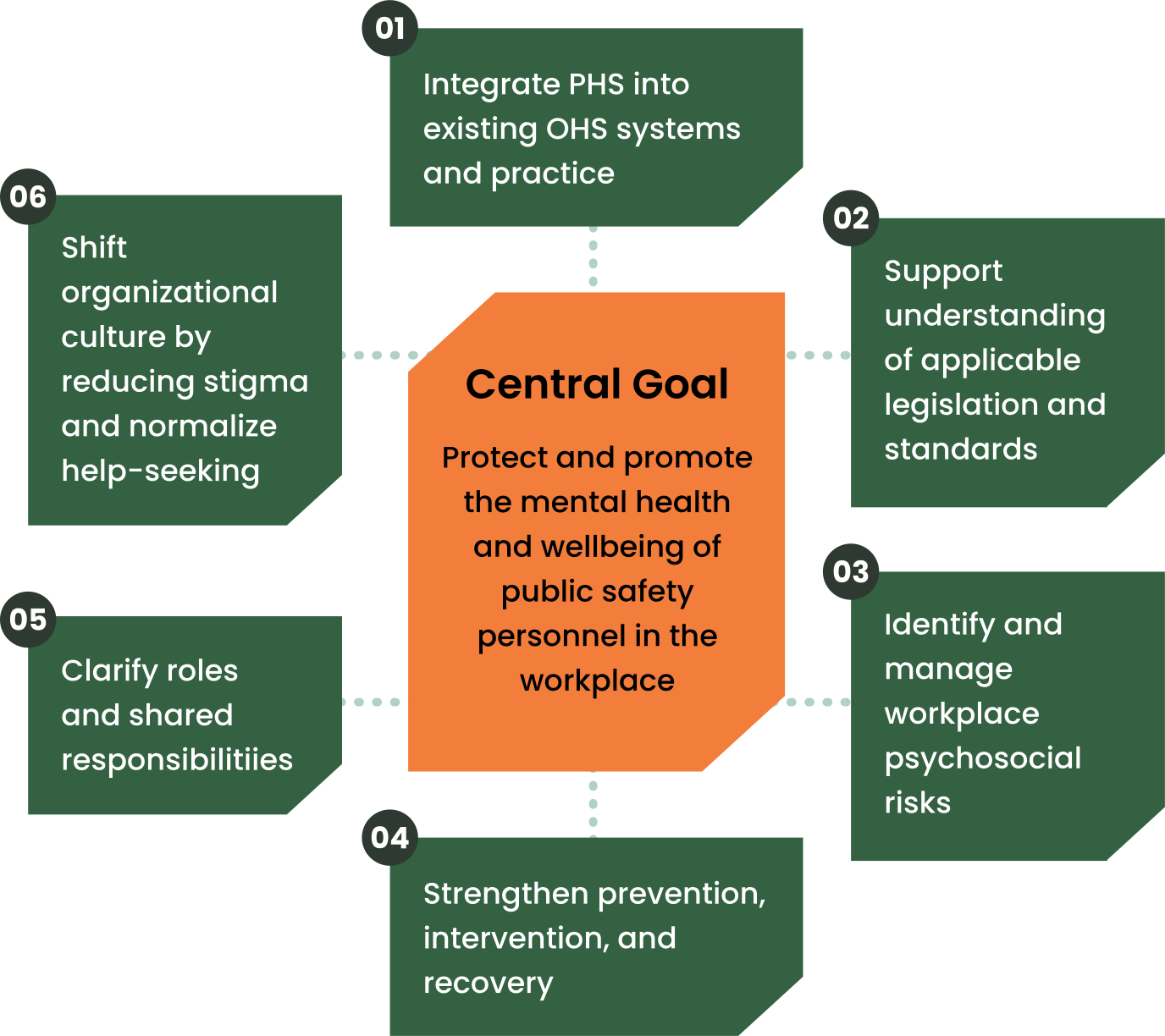
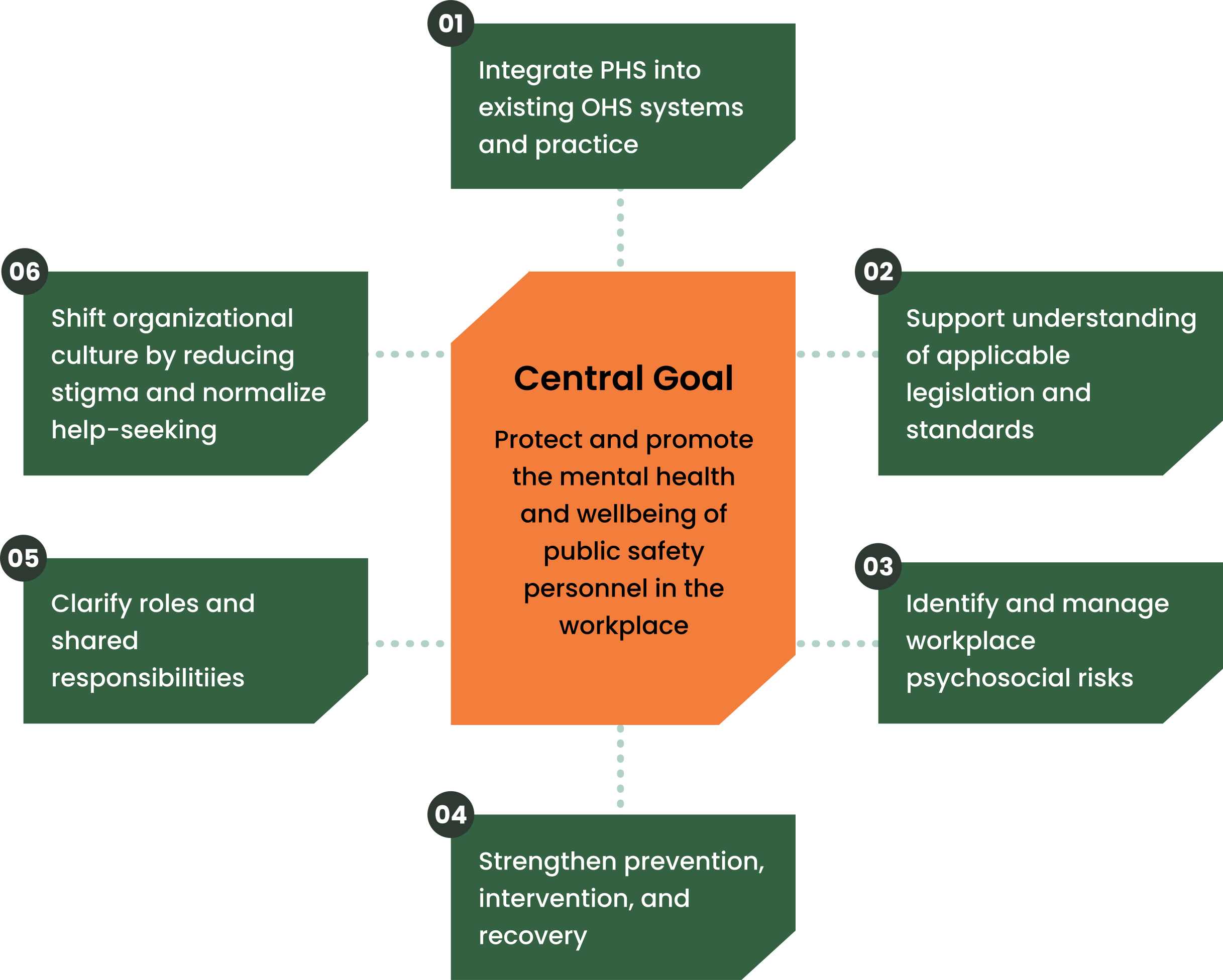
The guide supports six connected objectives that work together to advance one central goal.
Guide Video: An Introduction to Key Concepts
Before interacting with this guide, watch the short overview video to understand three foundational concepts:
- The What: The core PHS pillars (prevention, intervention, and recovery) and the associated program elements
- The Where: Your organization’s current stage of maturity.
- The How: Applying the Plan–Do–Check–Act steps to move forward in building your program
Organizational Culture
Culture change is the gradual shift in workplace attitudes, behaviours, systems, and everyday practices that shape how people think, talk about, and respond to mental health.
It happens when PHS becomes part of leadership actions, workplace policies, team interactions, decision-making, and support-seeking behaviours.
This guide can help identify practical actions to reduce stigma, encourage open conversations, support help-seeking, strengthen worker engagement, and embed PHS into everyday workplace practices.